
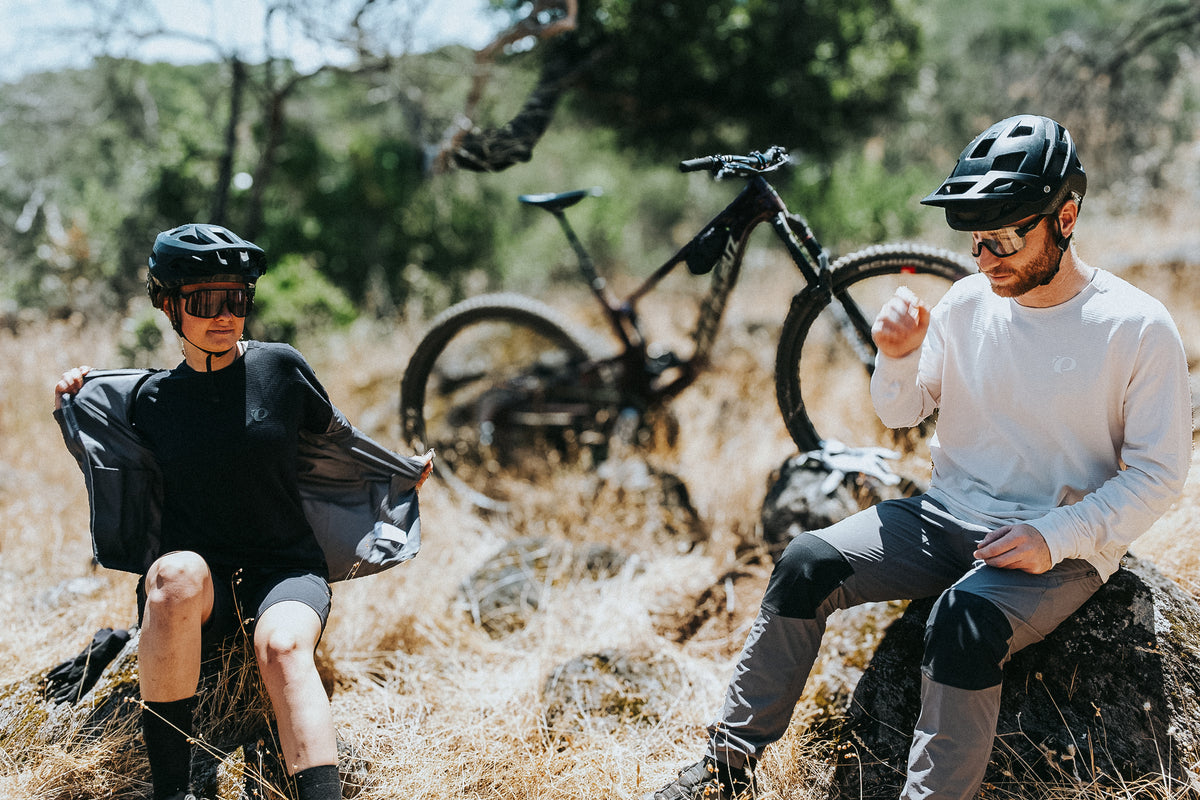
If you have ever shown up to the trailhead overdressed in July or underdressed on a chilly spring morning, you already know that figuring out what to wear mountain biking is half the battle. The right kit does not just keep you comfortable. It keeps you focused, confident, and riding longer.
Whether you are threading singletrack in summer heat or chasing late-season flow before the snow flies, your gear choices matter. This guide breaks it down by season so you know exactly what mountain bike gear to pack, layer, and leave at home.
Table of Contents
- MTB Gear Essentials
- What To Wear MTB in Spring
- What To Wear MTB in Summer
- What To Wear MTB in Fall
- What To Wear MTB in Winter
- Protection
- FAQs
The MTB Gear Essentials
Before we get into seasonal specifics, there are a few pieces of mountain biking gear that belong in your kit all year long.
- MTB shorts or pants: Baggy enough for freedom of movement, with a built-in liner or paired with a separate chamois for all-day comfort. Mountain bike shorts and pants come in men’s and women’s styles.
- MTB jersey: Relaxed fit, durable fabric, and a cut designed for the aggressive, forward-leaning position of trail riding. There are MTB jerseys for men and for women.
- MTB gloves: Grip, vibration damping, and hand protection. Non-negotiable.
- MTB shoes: Stiff enough for power transfer, grippy enough for hiking sections, and durable enough to take a beating.
- Cycling socks: Do not sleep on socks. A good pair wicks moisture, prevents blisters, and can add a layer of ankle protection.
With those basics covered, here is how to adapt your kit as the seasons change.
What To Wear MTB in the Spring
Spring MTB riding is the best kind of puzzle. One day it is 65°F and sunny. The next, you are dodging sleet on a muddy climb. It comes down to one word: versatility.
Your spring MTB kit includes:
- Lightweight baselayer: Moisture-wicking and close-fitting, it moves sweat away from your skin during hard climbs and keeps you from feeling clammy when the trail flattens out.
- MTB jersey over the top: A midweight jersey gives you the right amount of coverage without overheating.
- Lightweight packable jacket for men or women: Spring showers come fast. A wind/rain shell that stuffs into a jersey pocket or pack is worth its weight in gold.
- MTB shorts with a thermal liner or knee warmers: Mornings can be cold, afternoons warm. Knee warmers you can peel off mid-ride are a clean solution.
- Full-finger gloves: Keep hands warm through cold starts, especially on technical descents where wind chill kicks in.
Pro tip: Spring trails are often wet and soft. Pack an extra pair of socks, because even waterproof shoes have limits.
What To Wear Mountain Biking in the Summer
Summer is where the fun really is: long days, prime trail conditions, and the freedom to ride light. The goal is to stay cool without giving up protection.
Your summer MTB kit includes:
- Short-sleeve MTB jersey: Go for lightweight, breathable fabric that will not trap heat on long climbs. A looser fit promotes airflow.
- MTB shorts: This is the season for your lightest, most breathable pair. Make sure the liner chamois is doing its job on longer rides.
- Short-finger gloves: Grip and palm protection without the heat of a full-finger glove.
- Sun sleeves: If you are riding long miles in direct sun, sun sleeves add UPF protection without extra heat and pull on or off fast.
- Lightweight socks: Low-cut or mid-height, depending on preference and how much ankle coverage you want.
Pro tip: Even in peak summer, toss a lightweight gilet or wind vest in your pack for high-elevation descents. Temperature drops fast once you stop climbing.
What To Wear Mountain Biking in the Fall
Fall riding is underrated. The air is crisp. The crowds thin out. The trails get that perfect packed-in feel. But weather can turn fast, so layering is key.
Your fall MTB kit includes:
- Thermal or long-sleeve jersey: A midweight long-sleeve is your best friend in shoulder-season temperatures, around 45–60°F. It can go over a baselayer when it is colder or fly solo on milder days.
- MTB pants or shorts with leg warmers: Once temps consistently dip below 50°F, full leg coverage starts making sense. MTB pants give you that coverage in a trail-ready package.
- Packable jacket: Same logic as spring. Fall weather can flip on a dime. A jacket stuffed in your pack saves the ride.
- Full-finger gloves: Once the leaves start turning, switch back to full-finger. Cold hands on technical terrain are no fun.
- Lightweight hat or skull cap under your helmet: Keeps ears warm on cold morning rides without overheating by midday.
Pro tip: Fall light fades fast. If you are riding into the evening, add a light to your kit and bring a buff or neck gaiter for the ride back to the car.
What To Wear Mountain Biking in the Winter
Winter MTB riding is not for everyone. For those who do it, there is nothing like having the trails to yourself. The goal is staying warm without overheating, which means smart layering from head to toe.
Your winter MTB kit includes:
- Moisture-wicking baselayer: This is your most important layer. A good base keeps sweat off your skin and prevents that cold, clammy feeling when you ease off the gas.
- Insulating mid-layer: A thermal jersey or heavier midlayer goes over the base to trap warmth.
- Wind/waterproof outer jacket: This is where PEARL iZUMi’s Ride 365® system earns its keep: weather-smart layers that block wind, manage moisture, and keep you riding comfortably in rough conditions.
- MTB pants: Full-length MTB pants with wind and water resistance are your best bet for the coldest days.
- Insulated, windproof gloves: Cold hands are a safety issue, not just a comfort issue. Do not cut corners here.
- Thermal socks: Pair with waterproof or water-resistant shoes for the best results. Shoe covers are another strong option for adding cold and wet protection to your existing shoes.
- Helmet liner or thermal cap: Covers ears and keeps heat in where your helmet vents let it out.
Pro tip: Dress to be slightly cold at the trailhead. If you are perfectly warm before you start pedaling, you will be soaked in sweat by the first climb.
Protection: The Piece Most Riders Underestimate
No MTB kit is complete without cycling protection.
Beyond clothing, consider:
- Knee pads: Essential for aggressive trail and enduro riding, and smart for anyone who has ever had an unplanned meeting with a rock.
- Elbow pads: Useful for rowdier terrain or riders still dialing in technical sections.
- Full or half-face helmet: Depends on the style of riding, but do not skip the helmet research.
FAQs: What To Wear Mountain Biking
Do I wear baggy shorts or bib shorts for mountain biking?
Most trail and enduro riders go with baggy MTB shorts over a separate padded liner. You get freedom of movement and the casual look of a baggy short, plus chamois comfort where it counts. Cross-country riders sometimes skip the baggy layer and go straight bib shorts for efficiency. PEARL iZUMi MTB shorts are designed with enough room to accommodate a liner underneath, and many riders mix and match based on the ride.
Why do mountain bikers wear long sleeves even in warm weather?
Two reasons: protection and sun. Long sleeves, or a short-sleeve jersey paired with sun sleeves, shield your arms from trail brush, low branches, and the occasional rock scrape while also blocking UV exposure on long rides. The key is choosing lightweight, breathable fabric that will not trap heat. It is a lot less miserable than picking thorns out of your forearms at the trailhead.
Should I ride clipless or flat pedals for mountain biking, and does it affect my shoe choice?
Both are legit choices, and the right answer depends on your riding style. Clipless SPD pedals are great for technical climbs and long-distance efficiency. Flat pedals offer freedom of movement, quick foot dabs, and are popular for jump lines and more playful terrain. The shoe you need is different for each. PEARL iZUMi’s X-Alp Summit uses a BOA® Fit System and Vibram® ECOSTEP outsole for clipless SPD riders, while the X-Alp Launch is built for flats with a Goodyear® rubber PinLoc Outsole for pedal-pin grip.
What should I wear for XC riding versus enduro or trail riding?
XC kit prioritizes light and fast: form-fitting shorts or bibs, a close-cut jersey, minimal or no knee pads, and stiff clipless shoes for maximum power transfer. Enduro and trail riding call for baggy shorts, a more relaxed jersey, knee pads, and shoes with grippier outsoles for hike-a-bike sections. The protection you bring scales with the terrain, and PEARL iZUMi’s MTB line covers both ends of that spectrum.
What should I wear mountain biking in the rain?
A waterproof or water-resistant shell is your first line of defense. Look for a jacket with a cycling-specific cut, longer tail, and articulated shoulders so it works on the bike, not just standing next to it. PEARL iZUMi PI Dry® technology provides a permanent, PFAS-free water-shedding treatment built into the fabric at the fiber level, so it does not wash out over time like traditional DWR coatings. For your lower half, MTB pants or waterproof shorts keep you far more comfortable than regular shorts in wet conditions. Do not forget shoe covers: soaked feet are a fast way to end a ride early.
Gear Up. Get Out There.
The trails are calling, and now you have no excuse to show up underdressed or overdressed. Whether you are heading into your first spring ride or gearing up for a full winter season, PEARL iZUMi’s MTB collection has everything you need to ride confident, comfortable, and ready for whatever the trail throws at you.
